

Connectuv
Add a review FollowOverview
-
Founded Date March 28, 1947
-
Sectors Health Science Services
-
Posted Jobs 0
-
Viewed 22

Company Description
Why Silicon Valley is Losing its Mind over this Chinese Chatbot
DeepSeek supposedly crafted a ChatGPT rival with far less time, cash, and resources than OpenAI.
Register for the Slatest to get the most informative analysis, criticism, and suggestions out there, provided to your inbox daily.
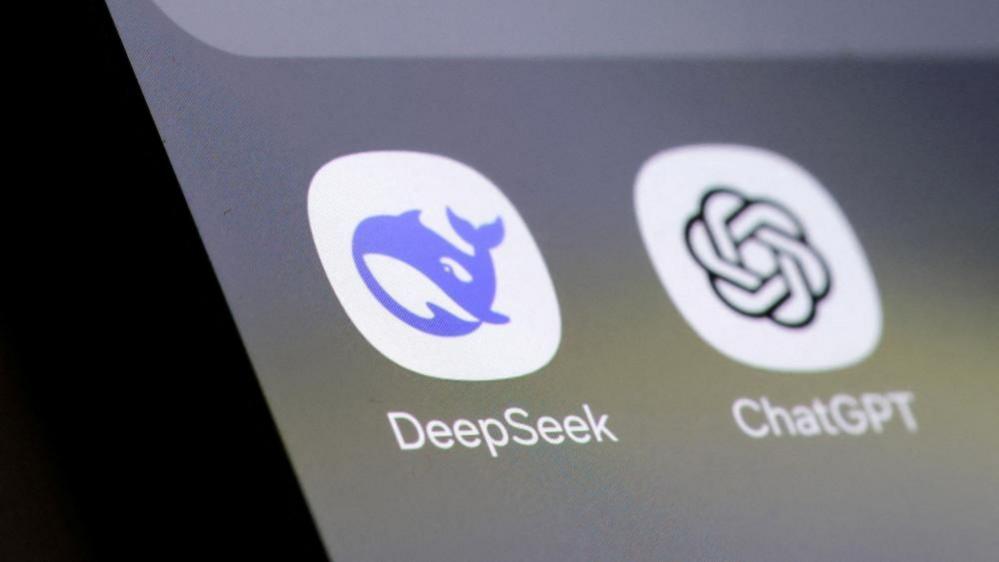
The United States might have kicked off the A.I. arms race, however a Chinese app is now shaking it up. R1, a chatbot from the startup DeepSeek, is sitting pretty at the top of the Apple and Google app shops, since this writing. Mobile downloads are exceeding those of OpenAI’s renowned ChatGPT, and its abilities are reasonably equivalent to that of any modern American A.I. app.
R1 went live on Inauguration Day. After just a week, it appeared to undercut President Donald Trump’s guarantees that his 2nd term would protect American A.I. supremacy. Yes, he stacked his advisory groups with A.I.-invested Silicon Valley executives, overturned the Biden administration’s federal A.I. standards, and cheered on OpenAI’s $500 billion A.I. facilities endeavor. For the markets, none of it might beat the impacts of R1’s appeal.
DeepSeek had actually supposedly crafted a viable open-source ChatGPT competitor with far less time, far less money, even more material barriers, and far fewer resources than OpenAI. (CEO Sam Altman even needed to confess that R1 is “an outstanding design.”) Now A.I. investors are losing their nerve and sending the stock indexes into panic mode, the Republican Party is floating extra Chinese trade constraints, and Trump’s tech advisers, without a tip of irony, are implicating DeepSeek of unjustly taking A.I. generations to train its own models.

How, and why, did this happen?
What the heck is DeepSeek?
DeepSeek was established in May 2023 by Liang Wenfeng, a Chinese software engineer and market trader with a deep background in device knowing and computer vision research study. Before entering chatbots, Liang worked as a knowledgeable quantitative trader who optimized his financial returns with the assistance of advanced algorithms. In 2016 he founded the hedge fund High-Flyer, which rapidly became one of China’s most affluent financial investment homes thanks to Liang and Co.’s intensive usage of A.I. models for enhancing trades.
When the Communist Party began implementing more stringent policies on speculative finance, Liang was currently prepared to pivot. High-Flyer’s A.I. innovations and experiments had actually led it to stockpile on Nvidia’s most potent graphic processing units-the high-efficiency chips that power a lot these days’s most elite A.I. When the Biden administration started limiting exports of these more-powerful GPUs to Chinese tech firms in 2022, the point was to attempt to avoid China’s tech industry from accomplishing A.I. bear down par with Silicon Valley’s. However, High-Flyer was currently making ample usage of its chip stash. In summer 2023, Liang established DeepSeek as a research-focused subsidiary of his hedge fund, one committed to engineering A.I. that might compete with the worldwide feeling ChatGPT.
So why did Nvidia’s stock value crash?
You can trace the inciting incident to R1’s sudden popularity and the larger revelation of its Nvidia stockpile. Last November, one analyst approximated that DeepSeek had tens of countless both high- and medium-power chips. CNN Business reported Monday that Nvidia’s worth “fell nearly 17% and lost $588.8 billion in market value-by far the most market worth a stock has ever lost in a single day. … Nvidia lost more in market worth Monday than all however 13 companies are worth-period.” Since the Nasdaq and S&P 500 are controlled by tech stocks, industries that depend on those tech business, and overall A.I. buzz, a bunch of other highly capitalized companies likewise shed their worth, though no place close to the extent Nvidia did.
Was this overblown panic, or are financiers ideal to be nervous??
There are really a lot of downstream ramifications-namely, just how much computing power and facilities are in fact demanded by innovative A.I., how much money needs to be invested as an outcome, and what both those aspects imply for how Silicon Valley deals with A.I. going forward.
It’s that much of a video game changer?
Potentially, although some things are still unclear. The most important metrics to consider when it concerns DeepSeek R1 are the most technical ones. As the New york city Times keeps in mind, “DeepSeek trained its A.I. chatbot with 2,000 specialized Nvidia chips, compared with as lots of as the 16,000 chips used by leading American counterparts.” That, ironically, may be an unintentional effect of the Biden administration’s chips blockade, which required Chinese companies like DeepSeek to be more innovative and effective with how they apply their more minimal resources.

As the MIT Technology Review composes, “DeepSeek needed to remodel its training process to reduce the stress on its GPUs.” R1 uses a problem-solving process comparable to the much more resource-intensive ChatGPT’s, however it lowers total energy use by intending straight for much shorter, more precise outputs instead of setting out its step-by-step word-prediction procedure (you understand, the conversational fluff and recurring text common of ChatGPT actions).
Fewer chips, and less total energy use for training and output, suggest fewer costs. According to the white paper DeepSeek released for its V3 large language design (the neural network that DeepSeek’s chatbots bring into play), final training costs came out to only $5.58 million. While the business confesses that this figure does not factor in the money splurged throughout the previous actions of the building procedure, it’s still indicative of some exceptional cost-cutting. By method of contrast, OpenAI’s most present, and the majority of powerful, GPT-4 design had a last training run that cost up to $100 million. per Altman. Researchers have actually approximated that training for Meta’s and Google’s most current A.I. designs most likely cost around the exact same amount. (The research firm SemiAnalysis price quotes, nevertheless, that DeepSeek’s “pre-training” structure procedure likely expense approximately $500 million.)
So what you’re stating is, R1 is rather effective.

From what we know, yes. Further, OpenAI, Google, Anthropic, and a few other significant American A.I. players have carried out high subscription expenses for their products (in order to make up for the expenses) and used less and less transparency around the code and information utilized to construct and train stated products (in order to protect their one-upmanships). By contrast, DeepSeek is providing a bunch of free and fast features, including smaller sized, open-source versions of its latest chatbots that need minimal energy use. There’s a reason energies and fossil-fuel business, whose future development projections depend a lot on A.I.’s power demands, were amongst the stocks that fell Monday.
Will American A.I. companies change their method?
The very first step that the U.S. tech market may take as a whole will be to acknowledge DeepSeek’s prowess while simultaneously pushing back against it as a sinister force.
Meta AI, which open-sources Llama, is celebrating DeepSeek as a triumph for transparent development, and CEO Mark Zuckerberg informed financiers that R1 has “advances that we will hope to implement in our systems.” The CEO of Microsoft (which, naturally, has used adequate facilities to OpenAI) credited DeepSeek with advancing “real developments” and has actually included R1 to its business reference directory of A.I. designs.
And as DeepSeek ends up being just another variable in the U.S.-China tech wars, American A.I. executives are doubling down on the resource- and data-intensive approach. Altman-whose once-tight relationship with Microsoft is apparently fraying-tweeted that “more calculate is more essential now than ever before,” suggesting that he and Microsoft both desire those ginormous information centers to keep humming. Blackstone, which has actually invested $80 billion in information centers, has no strategies to reassess those expenditures, and neither do the Wall Street investors already dismissing DeepSeek as a bunch of hype.
Microsoft has likewise declared that DeepSeek may have “wrongly” modeled its items by “distilling” OpenAI data. As White House A.I. and crypto czar David Sacks described to Fox News, the allegation is that DeepSeek’s bots asked OpenAI’s products “millions of concerns” and used the ensuing outputs as example information that could train R1 to “mimic” ChatGPT’s processing techniques. (Sacks mentioned “considerable proof” of this but declined to elaborate.)
Related From Slate
Shasha Léonard
Google Quietly Installed A.I. to My Workspace. Eliminating It Was Creepy.

Should users like myself be fretted about DeepSeek?
There are genuine factors for daily users to be worried. DeepSeek’s own privacy policy specifies that it gathers all input information and shops it in China-based servers. Wired reports that not only does DeepSeek self-censor its reactions to queries about Chinese authoritarianism, but it also sends data to other Chinese tech companies, including … TikTok parent company ByteDance.
Popular in Technology
1. Google Quietly Installed A.I. to My Workspace. It Was Creepy.
2. Your Infant Is Sick. If RFK Jr. Supervises, Your Emergency Department Visit May Look Very Different.
3. Why Silicon Valley Is Losing Its Mind Over This Chinese Chatbot
4. The First Big Trump Scam Is Already Exploding in Everyone’s Faces
The cloud-security company Wiz kept in mind in a research study report that DeepSeek has allowed big quantities of information to leakage from its servers, and Italy has currently banned the company from Italian app stores over data-use issues. Ireland is likewise penetrating DeepSeek over data concerns, and executives for cybersecurity firms told Bloomberg that “hundreds” of their clients throughout the world, consisting of and particularly governmental systems, are restricting employees’ access to DeepSeek. In the U.S. proper, the National Security Council is investigating the app, and the Navy has currently banned its enlistees from using it entirely.
Where does American A.I. go from here?

Things will most likely stay business as typical, although stateside firms will likely help themselves to DeepSeek’s open-source code and agitate for the U.S. government to secure down even more on trade with China. But that’ll just do so much, specifically when Chinese tech giants like Alibaba are releasing models that they claim are better than even DeepSeek’s. The race is on, and it’s going to involve more money and energy than you could possibly imagine. Maybe you can ask DeepSeek what it thinks.
Get the very best of news and politics
Thanks for registering! You can manage your newsletter subscriptions at any time.
